Physical Address
304 North Cardinal St.
Dorchester Center, MA 02124
Physical Address
304 North Cardinal St.
Dorchester Center, MA 02124
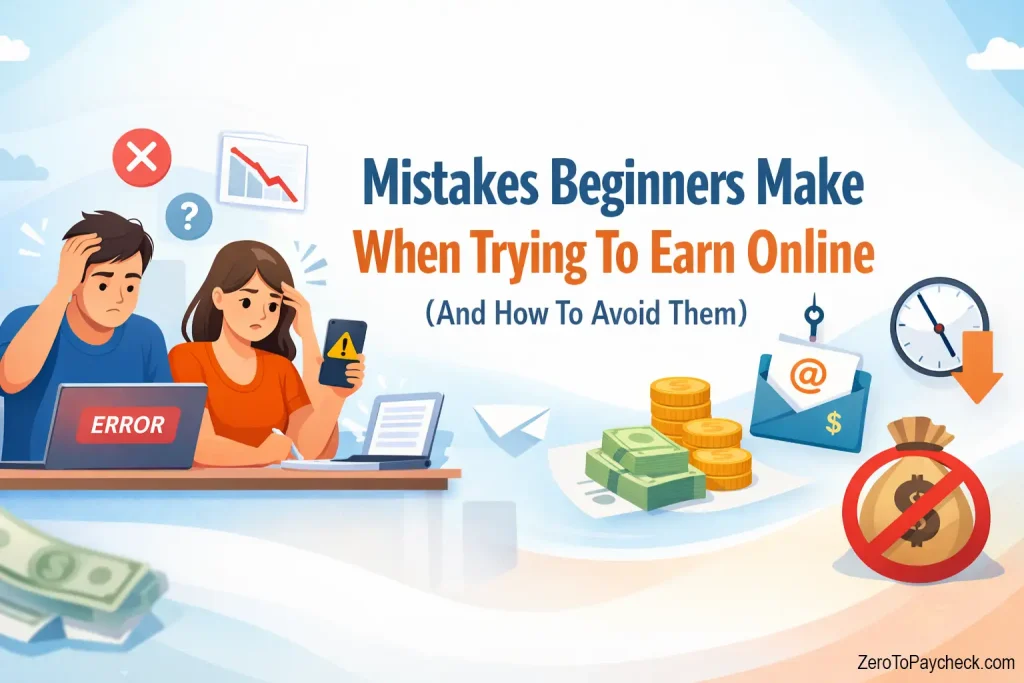
Let me guess. You’ve read three articles about making money online this week, watched at least two YouTube videos from someone with a Lamborghini in the thumbnail, and you’re still not sure where to start—or who to trust.
You’re not alone. And honestly? The confusion isn’t your fault.
The internet has a near-limitless supply of people willing to sell you a dream. The reality of building a real, sustainable online income is buried under mountains of hype, sketchy courses, and advice that sounds great on a slide deck but falls apart in practice. According to the FTC, consumers reported losing over $10 billion to fraud in 2023 alone—a record high—and online business scams accounted for a significant portion of that.
I’ve been writing about online business and money-making strategies for over two decades. Before that, I built several of my own—some that worked, and a few spectacular failures I’ll tell you about shortly. What I’ve learned is this: most beginners don’t fail because they lack talent, ideas, or even motivation. They fail because they make the same predictable, entirely avoidable mistakes.
This article isn’t a list of vague tips. It’s a map of the minefield. We’re going to walk through the seven biggest mistakes I see beginners make when they’re trying to earn online, explain the psychological trap behind each one, and give you the specific, boring-but-effective alternative. Avoiding these mistakes won’t guarantee success—nothing will—but it will dramatically shorten the time it takes to get there.
Let’s get into it.
You won’t move forward without the right business name, a polished logo, a finished website, and a complete understanding of how everything will work. Sound familiar?
| Key Takeaway Analysis paralysis is the #1 killer of online income before it ever starts. The ‘perfect’ plan is procrastination in disguise. Your real education begins the moment you take your first imperfect action. |
Here’s what surprised me when I tried to launch my first freelance writing service: I spent three weeks obsessing over my portfolio website’s color scheme. Three weeks. Meanwhile, I hadn’t actually pitched a single client. When I finally did, I landed a paying gig in four days—using nothing but a simple email and a Google Doc with three writing samples.
The website? That client never asked about it.
A study by Startup Genome found that startups that launch quickly and iterate are significantly more likely to succeed than those that spend months in planning mode. The principle applies equally to one-person side hustles. You learn more from attempting one real sale than from a hundred hours of research.
Your first goal is not a business. It’s a single transaction. Here’s how to get there:
Don’t build a Shopify store before you’ve validated that anyone actually wants what you’re selling. Don’t pay for a domain name until you’ve tested your idea. The minimum viable product isn’t a Silicon Valley buzzword—it’s a survival strategy.
The course-selling industry is, to put it bluntly, one of the most effective marketing machines ever built. It preys on hope. On the fear of missing out. On the (completely understandable) desire for a shortcut.
| Key Takeaway Information is almost always free. You’re not paying for secrets when you buy a course—you’re paying for motivation and packaging. Until you’ve earned $500 online, every dollar spent on education should come from free resources. |
I can already hear someone asking: ‘But what about that course I saw on Instagram that promises a six-figure income in six months?’ Let’s talk about that specifically.
A former student of mine—I’ll call her Priya—fell for the ‘buy my course to learn my secret’ trap. Twice. She spent $1,400 on two programs promising to reveal the ‘system’ behind making passive income. The secrets? Repurpose content and post consistently. Both pieces of advice she could have found for free in an afternoon of YouTube research.
The FTC has taken action against numerous online course sellers for deceptive income claims. When someone shows you screenshots of $50,000 weeks, ask yourself: where is the audited income statement? When was that screenshot taken? How does that compare to their students’ average results?
Before spending money on paid education, exhaust these free alternatives:
If, after you’ve made your first $500, you identify a specific skill gap that a paid course can genuinely address? Go for it. Reinvesting earned money in targeted education is smart. Spending borrowed money on vague ‘systems’ is a trap.
Monday: dropshipping. Tuesday: print-on-demand on Etsy. Wednesday: crypto trading. Thursday: TikTok affiliate marketing. Friday: AI content farms.
Chasing the next shiny object is like digging a hundred shallow holes instead of one deep well. You’ll never find water.
| Key Takeaway Momentum compounds. Every time you abandon a method and start over, you reset to zero. The beginner who sticks with one approach for 90 days almost always outperforms the one who tries five different things. |
I’ll be honest: I know everyone is raving about AI-generated content farms for quick cash right now, but it makes me cringe. Not because AI isn’t useful (it absolutely is), but because beginners are being sold the idea that they can build a faceless, automated income machine in a weekend. What they’re actually building is a race to the bottom—low-quality content competing with millions of other low-quality articles, on platforms that are actively trying to filter it out.
Here’s the thing about trends: by the time you hear about one, the easy money is usually gone. The people selling the trend are the ones profiting.
(Full transparency: I once spent six weeks building a dropshipping store for what I thought was a hot product niche. Turned out the product design was trademarked. The store never went live. That was an expensive, time-consuming lesson in following excitement instead of doing due diligence.)
Pick one business model that matches at least two of these criteria:
Then commit to it for a minimum of 90 days. No pivoting. No exceptions. After 90 days, you’ll have real data to make an informed decision—rather than anxiety-driven guesses. For help evaluating which model fits you, check out our guide on [Best Online Business Models for Beginners].
‘I made $1,000 this month!’ That’s exciting. But if you spent $950 on Facebook ads to make it happen, you didn’t make $1,000. You made $50. And if it took you 60 hours? You made less than a dollar an hour.
| Key Takeaway Revenue is vanity. Profit is sanity. Track every dollar in and every dollar out from day one. A spreadsheet that takes ten minutes to maintain can save you months of wasted effort chasing unprofitable strategies. |
Freelancers and gig economy workers I’ve spoken with consistently identify one blindspot: they don’t factor their own time into profitability. If you’re making $20 an hour on Fiverr but spending two hours on admin, client communication, and revisions for every hour of paid work, your effective hourly rate is $6.67.
There’s also the tax issue. This is genuinely important, and a lot of beginners get blindsided. If you earn over $600 through platforms like PayPal, Upwork, Etsy, or Amazon KDP, you’ll likely receive a 1099-K. That income is taxable. The IRS expects you to know this even if no one told you. A reasonable rule of thumb: set aside 25-30% of every dollar you earn in a separate account for taxes.
Set up a simple tracking system before you earn your first dollar. You don’t need QuickBooks. A Google Sheets document with four columns works fine:
Review it weekly. If a strategy isn’t profitable after 30 days of genuine effort, adjust before you sink more time and money into it. For a template to get started, see our resource on [Simple Income Tracking for Online Earners].
You’ve been ‘working on your business’ for three hours. You’ve redesigned your logo, watched two tutorials about SEO, updated your Instagram bio, and organized your bookmarks folder.
Zero dollars earned. Zero progress made. Technically.
| Key Takeaway Busy work feels productive because it creates the sensation of movement without the discomfort of real action. If the task doesn’t directly lead to a sale, a client, or a new potential customer, it’s probably a distraction. |
This one is sneaky because it feels like work. And some of this stuff—a decent website, some understanding of SEO—genuinely matters, eventually. But beginners obsess about follower counts and aesthetic branding when they should be spending that time on direct outreach, publishing content, or actually building the product.
In my experience, the single biggest time-waster for new online earners is consuming instead of creating. Watching a video about how to write a cold email is not the same as writing ten cold emails. Reading about the gig economy on Medium is not the same as submitting your first proposal on Upwork.
Each morning, identify your single ‘money-making activity’ for the day. It might be:
Do that activity for two hours before you touch anything else. Before email, before social media, before tutorials. Two focused hours of real action will beat eight hours of productive-feeling busyness every single time.
You built it. Now where are they?
‘Build it and they will come’ is a movie quote. Not a business plan. And yet it’s the silent assumption behind almost every failed online venture I’ve ever seen.
| Key Takeaway No matter how good your product, service, or content is, you have to actively put it in front of people who need it. Plan to spend at least half your working time on marketing and sales, especially in the first six months. |
Everyone says ‘follow your passion to make money.’ I’d argue that’s actually dangerous advice for a beginner. If you’re passionate about medieval calligraphy but there are only 200 people on earth who’d pay for it, passion won’t pay your bills. Skill plus market need is a much safer starting point than passion alone.
I’ve watched talented people build beautiful print-on-demand designs on platforms like Printful and Redbubble, then sit back and wonder why nothing sold. They mistook the act of creation for the act of marketing. Those are two entirely different jobs.
Build your marketing plan before you build your product. Ask yourself:
Pick one marketing channel and master it. Don’t spread across Pinterest, TikTok, Twitter, and a podcast simultaneously. One channel, executed consistently, beats four channels executed poorly. For more on this, see our guide to [How to Market Yourself Online Without Paid Ads].
The online income space has a predator problem. Scams target people who are financially stressed and hopeful—in other words, most beginners. And even if you avoid the scams, two quieter dangers can end your journey just as effectively: unpaid taxes and unsustainable hustle culture.
| Key Takeaway Three things end more online businesses than competition ever will: falling for a scam, getting blindsided by a tax bill, and burning out from unsustainable effort. All three are preventable with basic, boring precautions. |
| 🚨 Red Flags: Signs a ‘Job’ or Opportunity Is a Scam They ask you to pay to start earning (a classic pyramid scheme signal). Income claims are extraordinary and vague (‘make $5,000 a week working from home!’). They pressure you to decide quickly (‘this offer expires in 24 hours’). The business model isn’t clearly explained. They ask for your banking details or Stripe/PayPal login before you’ve received a cent. Testimonials are anonymous, undated, or lack verifiable details. No physical address, no real company name, no public track record. |
A freelancers union survey found that a significant number of independent workers were surprised by their first self-employment tax bill. Don’t be one of them. The moment you start earning, open a separate savings account labeled ‘Tax.’ Transfer 25-30% of every payment into it. Don’t touch it. When Q1 estimated taxes or year-end filing arrives, you’ll be fine.
You might be wondering: isn’t hustle culture a badge of honor in the online business world? Sure, if you want to burn out in six months. The most sustainable online income earners I know treat their work schedule like a client commitment. They schedule off-time. They protect evenings and weekends, especially early on when the temptation to grind 24/7 is strongest.
Burnout ends careers. Rest is a business strategy. For legitimate platforms where you can start safely and verify reputation, see our list of [Best Freelance Sites for Beginners] and [Legitimate Ways to Earn Extra Cash Online].
Knowing the mistakes is one thing. Having a concrete starting point is another. Here’s a week-by-week framework to begin your online earning journey with minimal wasted time and money.
That’s it. Boring, methodical, and effective. Realistic income expectations matter here: most beginners earn their first $100-$500 online within 30-90 days of consistent, focused effort. Six figures is a year or more away for almost everyone, and that’s okay. The goal of Month 1 is a single proof of concept, not financial freedom.
No. Honestly, no. The internet economy is still expanding. Freelance platforms like Upwork and Fiverr are adding millions of new clients every year. Etsy and Amazon KDP are growing. New niches emerge constantly. The opportunities are genuinely there—but they require real work, not just a course purchase and a social media account.
Not an expert. But you need to be more capable than the person you’re helping. If you know more about graphic design than a local restaurant owner, you can offer design services. If you’ve figured out how to organize a small business’s bookkeeping, that’s a sellable skill. Start where your existing knowledge already exceeds someone else’s need.
Paying to earn. Any opportunity that requires an upfront payment before you see a cent should be treated with extreme skepticism. Legitimate freelance platforms (Upwork, Fiverr), marketplaces (Etsy, Amazon), and affiliate networks (ShareASale, Impact) don’t charge you to join. They take a commission only when you earn.
What I’ve personally found—and what most honest practitioners will tell you—is that consistent, part-time income (think $500-$2,000/month) takes 6-18 months of focused effort. Factors that accelerate this include existing skills, specific niche selection, and consistent daily action. Factors that slow it down include scattered focus, expensive mistakes early on, and chasing trends.
Service-based businesses (freelance writing, virtual assistance, social media management, tutoring) have the lowest barrier to entry—often zero dollars to start. You leverage skills you already have, get paid quickly, and learn the fundamentals of running a business without risking capital. Once you’ve built cash flow, you can experiment with passive income models like print-on-demand, affiliate marketing, or digital products.
Not all of them. But most are overpriced relative to the value they deliver, and a vast number make misleading income claims. The good ones are specific (they teach one skill deeply), taught by someone with a verifiable, transparent track record, and backed by genuine student results—not cherry-picked screenshots. Even then: exhaust free resources first.
Passive income is real, but it’s rarely passive to build. Publishing on Amazon KDP, creating digital products, building affiliate content, or investing in dividend stocks—all of these can generate income without continuous active work. But they all require significant upfront effort and time before the passive element kicks in. The ‘passive’ part comes later. The work comes first.
Let’s come back to where we started. You were overwhelmed. Maybe skeptical. Possibly a little burned by something that didn’t work.
Here’s the truth: success online isn’t about being brilliant. It isn’t about finding the right secret or buying the right course or catching the right trend. It’s about being consistent, focused, and boring in all the right ways.
The system—the ads, the gurus, the constant parade of ‘new opportunities’—is designed to keep you distracted. Every time you chase something new, someone else profits from your distraction. Your job is to ignore the noise and do the work.
Pick one mistake from this list. The one that resonates most. The one you’re already making or are most tempted to make. Apply the ‘Correct Path’ today. Not tomorrow. Not after you finish one more article.
Today.
That feeling of overwhelm you had when you started reading this? It shrinks the moment you have a clear path of what not to do. You can’t control everything. But you can control whether you fall into the predictable, avoidable traps that stop most people before they really begin.
Results will vary based on effort, skills, market conditions, and the specific strategy chosen. This article is for informational purposes and does not guarantee specific income outcomes. Always consult a tax professional regarding your specific situation.