Physical Address
304 North Cardinal St.
Dorchester Center, MA 02124
Physical Address
304 North Cardinal St.
Dorchester Center, MA 02124
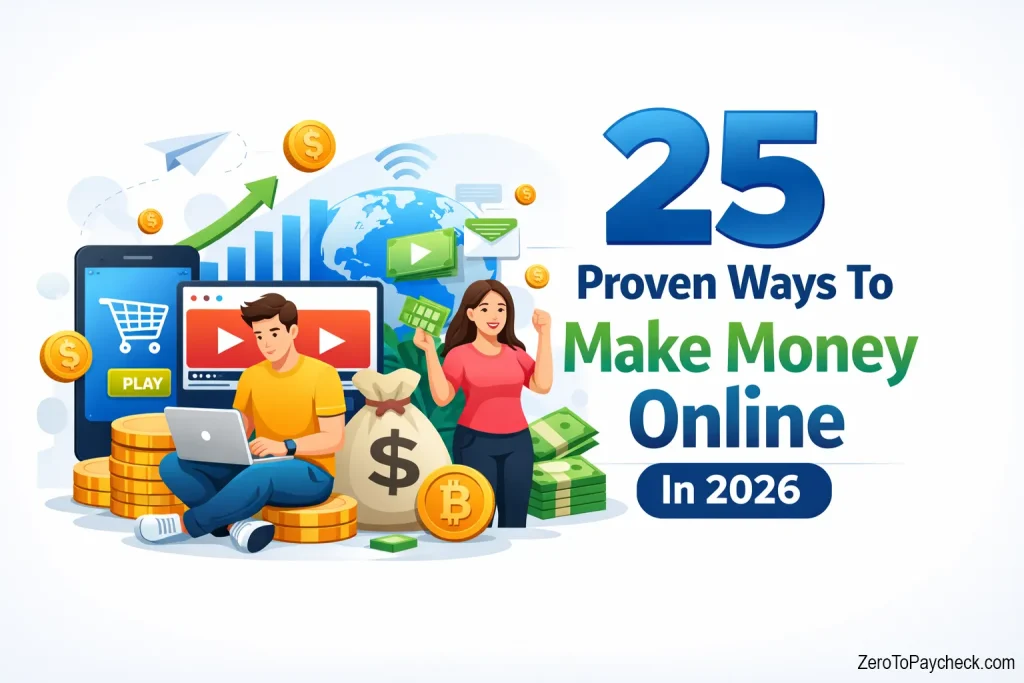
A Battle-Tested, No-Hype Guide for Beginners and Experienced Side-Hustlers Alike
Let me be straight with you. If you’ve Googled “make money online” recently, you’ve waded through a cesspool of recycled listicles, affiliate-link farms, and YouTube thumbnails featuring guys in rented Lamborghinis. I get why you’re skeptical. I was too.
But here’s the uncomfortable truth: the opportunity to earn real money online has never been larger. In 2026, a combination of AI tools, the ongoing shift to remote work, and the maturation of creator economy platforms has lowered the barrier to entry to almost nothing. According to a 2025 Upwork report, over 64 million Americans freelanced last year, contributing $1.27 trillion to the U.S. economy. That’s not a niche — that’s a structural economic shift.
Making money online in 2026 means using the internet — through services, content, products, or investments — to generate income, whether that’s an extra $500 a month or a full-time six-figure income. The methods range from active gigs you start this week, to passive digital assets that earn while you sleep. This guide covers all of it.
I’ve been writing about business and technology for over 20 years. I’ve also built things: a niche e-commerce store, a content consultancy, and yes, I’ve had my share of expensive failures (more on that shortly). So this isn’t just research — it’s a map drawn from actual terrain. Let’s cut through the noise.
The online money-making landscape has shifted more in the past two years than in the previous decade. Three forces are reshaping everything:
AI is a co-pilot, not a competitor. Tools like ChatGPT, Midjourney, and Claude have made content creation, coding, and design dramatically faster. This doesn’t mean your job is gone — it means the floor is higher. Everyone has access to these tools. The differentiator is judgment, taste, and real-world experience. Use AI to go 10x faster; use your brain to make it actually good.
Platform saturation is real, but niches are alive. Generic dropshipping stores? Oversaturated. Generic “make money” YouTube channels? Incredibly crowded. But hyper-niche operations — a Shopify store selling custom gear for axe-throwing leagues, or a Substack newsletter covering biotech for retail investors — these are thriving. Specialization is the moat you need to build in 2026.
Authenticity is now currency. Audiences are exhausted by polished, corporate-feel content. They want real people with real experience. The creator who genuinely uses and understands their niche is crushing the algorithm-optimized content farm. This is actually good news for anyone willing to show up as themselves.
| Contrarian take: Everyone tells you to ‘follow your passion’ to make money online. In my experience, that’s a fast track to burnout when the money doesn’t materialize quickly. A better approach? Follow your skill. Let income validate the path. Passion tends to develop naturally once you start getting paid for something you’re good at. |
I’ve grouped these into five paths based on your situation, skills, and how quickly you need income. No path is better than another — the best one is the one you’ll actually commit to.
Best for: People who already have marketable skills (writing, design, coding, marketing, finance, etc.) and want income relatively quickly. This is active income — you trade time for money — but it’s the fastest way to replace a salary.
Who it’s for: Experienced professionals with deep expertise in a field
Earning potential: $100–$300/hour; $5,000–$25,000/month retainers for fractional roles
💡 Key tip: Don’t compete on price — compete on outcome. Position yourself as a specialist who solves a specific, expensive problem. ‘I help SaaS companies reduce churn’ beats ‘I do marketing’ every time. Platforms like Toptal and Expert360 vet rigorously but pay accordingly.
Who it’s for: Strong writers with industry knowledge in finance, tech, healthcare, or legal
Earning potential: $0.25–$1.50 per word; $500–$5,000 per project
💡 Key tip: The days of getting paid $0.02/word to churn out generic blog posts are over — AI has commoditized that. But specialized writing that requires real expertise? That commands premium rates. A B2B SaaS case study that converts customers is worth thousands. Position accordingly.
I know a former corporate attorney named Marcus who transitioned to freelance legal writing in 2024. Within six months he was earning more per hour than at his firm, working four days a week, and turning down clients. Niche expertise + writing skill = goldmine.
Who it’s for: Organized, detail-oriented people who love systems and communication
Earning potential: $20–$75/hour; $1,500–$5,000/month
💡 Key tip: Don’t just offer general VA services. Specialize: become a ‘YouTube channel manager’ or a ‘podcast production VA.’ Platforms like Belay Solutions and Time Etc match you with clients, or build your own client base through LinkedIn outreach.
Who it’s for: Anyone with verifiable expertise in an academic subject or professional skill
Earning potential: $25–$200/hour depending on subject and level
💡 Key tip: The K-12 tutoring market is massive and year-round. But don’t sleep on adult skills coaching — LinkedIn Learning instructors, career coaches, and interview prep specialists are doing extremely well. Wyzant and Tutor.com handle the matching; your own website handles the premium clients.
Who it’s for: Tech-curious people without formal coding backgrounds
Earning potential: $50–$150/hour; $2,000–$15,000 per project
💡 Key tip: Here’s what surprised me when I looked into this: Webflow developers are in genuinely short supply relative to demand. Small businesses want custom websites but can’t afford full-stack development. No-code fills that gap perfectly. Webflow University is free — start there today.
Best for: Creators, teachers, and makers who want to build assets that generate income over time. More upfront work, but the leverage is real — you can sell the same product thousands of times.
Who it’s for: Designers or detail-oriented people willing to learn Canva or Illustrator
Earning potential: $200–$5,000/month (widely variable)
💡 Key tip: Wedding planners, teachers, and small business owners are constantly buying planners, templates, trackers, and wall art. One well-designed wedding planning bundle can sell hundreds of times with zero additional effort. Start with Etsy, diversify to Creative Market and Gumroad.
Who it’s for: Anyone with expertise that others want to acquire
Earning potential: $500–$50,000+ over the course’s lifetime
💡 Key tip: The mistake most beginners make: building a course before validating demand. Before you build anything, run a live workshop, a paid webinar, or even just post content on the topic and measure engagement. Teachable and Kajabi handle the tech; you handle the expertise.
| Real talk on courses: The market for generic ’10 steps to financial freedom’ courses is absolutely saturated. But hyper-specific courses — ‘Permit Drawing for Residential Deck Contractors’ or ‘Voice Acting for Audiobooks’ — are often dominated by one or two mediocre offerings. That’s your opportunity. |
Who it’s for: Writers and subject matter experts with a strong point of view
Earning potential: $500–$20,000+/month with 500–5,000 paid subscribers
💡 Key tip: The paid newsletter model has matured beautifully. A newsletter hitting 1,000 paid subscribers at $10/month generates $10,000 monthly recurring revenue — that’s a real income. The key is writing about something specific enough that readers feel they can’t get it anywhere else. Substack’s built-in discovery helps enormously with growth.
Who it’s for: Designers and niche community members
Earning potential: $200–$3,000/month
💡 Key tip: Standard POD is oversaturated. The twist that works in 2026: hyper-niche communities. Think custom apparel for competitive axe-throwers, laser engraving enthusiasts, or fans of obscure historical battles. Printful integrates with Etsy and Shopify; your job is just the design and marketing.
Who it’s for: Photographers and videographers already creating content
Earning potential: $200–$2,000+/month (builds over time with a large portfolio)
💡 Key tip: AI-generated stock imagery has hurt generic photos hard. What still sells: authentic lifestyle imagery, behind-the-scenes business content, and B-roll footage from underrepresented demographics and geographies. Adobe Stock, Shutterstock, and Pond5 are the major platforms. The long-tail works here — 500 photos earning $5/month each is $2,500.
Who it’s for: Content creators with patience and keyword research skills
Earning potential: $500–$20,000+/month (takes 6–18 months to ramp up)
💡 Key tip: This is the long game, and I mean that genuinely. Don’t start an affiliate blog expecting income in Month 1. But a well-built, SEO-optimized site targeting buying-intent keywords in a high-commission niche (software, finance, home improvement) can generate substantial passive income for years. Tools: Ahrefs or Semrush for keywords, Mediavine or AdThrive for display ads once traffic scales.
I should be honest here: I wasted about $2,000 on a dropshipping course back in the day that told me almost nothing I couldn’t have learned for free on YouTube. The core lesson? Always validate a business model through free resources before investing significant money in education about it. Especially in a space where the ‘guru’ is often more interested in selling the dream than the strategy.
Who it’s for: Detail-oriented hustlers willing to do deep product research
Earning potential: $500–$10,000+/month; highly variable
💡 Key tip: Generic dropshipping (Aliexpress supplier + Facebook ads) is nearly dead. What works now: finding a hyper-niche product with loyal buyers and either private labeling it or building a genuine brand around it. Shopify + AutoDS for automation; TikTok Shop for organic discovery without ad spend.
Who it’s for: Analytical people with capital to invest ($500–$5,000 to start)
Earning potential: $1,000–$50,000+ per flip
💡 Key tip: Buying underperforming websites, improving their SEO and monetization, and selling them for a profit is the digital equivalent of house flipping. Marketplaces like Flippa and Motion Invest list these assets daily. A site earning $200/month often sells for 30–40x monthly earnings — improve it to $400/month and the return on investment is substantial.
Who it’s for: Writers, researchers, and systematically-minded creators
Earning potential: $200–$5,000/month with a catalog of titles
💡 Key tip: Low-content books (journals, planners, activity books) have become crowded, but niche non-fiction still performs well. A well-researched book on a specific skill or hobby — published in both Kindle and paperback format — can earn consistently for years. Amazon’s algorithm does a lot of the marketing for you.
Who it’s for: Artisans, crafters, and makers with a unique product
Earning potential: $300–$10,000+/month
💡 Key tip: Etsy’s handmade marketplace is competitive but not impossible. The winners in 2026 are combining genuine craft with smart SEO and Pinterest marketing. Etsy’s own algorithm rewards shops with consistent sales velocity and strong reviews. The key: don’t try to compete on price — compete on uniqueness and story.
Quick word on ‘passive’: nothing online starts passive. It all requires significant upfront effort. The passive part comes later, once the asset is built and running. Don’t let anyone sell you on passive income without being honest about that front-load.
Who it’s for: Patient creators willing to produce consistently for 6–12 months before meaningful income
Earning potential: $500–$50,000+/month (combines AdSense, sponsorships, affiliate, products)
💡 Key tip: The YouTube creator who builds a tight, specific audience around a topic they know deeply — and then monetizes through multiple streams — is building a durable business. Don’t chase viral. Chase ‘the definitive channel for [specific niche].’ Affiliate links in descriptions, brand deals, and your own courses compound the AdSense revenue significantly.
Who it’s for: Comfortable on camera, interested in consumer products
Earning potential: $150–$750 per video; $2,000–$8,000/month for active creators
💡 Key tip: User-Generated Content (UGC) creators film product demonstrations and lifestyle videos that brands use in their own advertising — without the creator needing a large following. It’s one of the most accessible creator paths in 2026. Billo and Trend are marketplaces connecting brands with UGC creators; a phone camera and decent lighting are your only startup costs.
Who it’s for: Investors with capital to deploy ($1,000+) and comfort with risk
Earning potential: 6%–12% annual returns (with real default risk)
💡 Key tip: Platforms like Prosper and LendingClub facilitate loans between individuals. Returns can be attractive, but defaults happen — diversify across many small loans, never put in money you can’t afford to lose, and treat this as one piece of a diversified income strategy, not a primary one. Disclosure: this carries genuine financial risk.
Who it’s for: Anyone with consistent savings ability, long-term mindset
Earning potential: 3%–7% annual yield; compounds significantly over 5–10 years
💡 Key tip: Apps like M1 Finance, Fidelity, and Schwab make dividend investing accessible with as little as $1. A portfolio of dividend-paying ETFs won’t replace your income quickly, but it’s genuinely passive and builds real wealth over time. The compound effect on reinvested dividends over a decade is remarkable. Remember: consult a financial advisor for personalized advice.
Who it’s for: Developers or non-developers with a specific problem to solve (and budget for development)
Earning potential: $500–$50,000+/month for successful products
💡 Key tip: A Micro-SaaS is a small, focused software tool solving a specific problem — a Chrome extension, a Zapier alternative for one workflow, a niche analytics dashboard. IndieHackers and Product Hunt are full of solo founders who built these in evenings. If you can code: build it yourself. If you can’t: tools like Bubble or partnering with a developer via Upwork is viable.
These methods won’t make you rich, but they’re fast and real. If you need $200 this week, this is your section.
Who it’s for: Anyone willing to share opinions; some target specific demographics
Earning potential: $50–$300 per session (1–2 hours)
💡 Key tip: Sites like User Interviews, Respondent, and Schlesinger Qualitative connect companies with paid research participants. Some studies are simple surveys; others are moderated conversations. You won’t build a business here, but a few sessions a month adds meaningful side income with essentially zero skill required.
Who it’s for: Anyone who can articulate their thought process while navigating digital products
Earning potential: $10–$60 per test (15–30 minutes)
💡 Key tip: Companies need real users to test their products before launch. UserTesting.com and TryMyUI pay you to navigate websites or apps and speak your thoughts aloud. Tests take 15–30 minutes. It’s not life-changing money, but it’s genuinely easy and can add $200–$400/month for a few hours of work.
Who it’s for: Anyone with a marketable skill, even simple ones
Earning potential: $5–$500 per gig; $500–$3,000/month for active sellers
💡 Key tip: The key to Fiverr in 2026: don’t list commodity services. List the transformation. ‘I will proofread your 1,000-word business email’ is fine. ‘I will make your investor pitch email impossible to ignore’ is better. Gig packaging — a basic, standard, and premium tier — consistently increases average order value.
Who it’s for: Anyone with stuff they don’t use
Earning potential: $200–$2,000 per decluttering session; ongoing with sourcing
💡 Key tip: eBay, Facebook Marketplace, Poshmark (clothing), Decluttr (electronics), and Reverb (musical instruments) are your platforms. Decluttering your own home first, then sourcing from thrift stores or estate sales, can make this a real side hustle. Electronics and brand-name clothing move fastest.
Who it’s for: Detail-oriented people who don’t mind a structured task
Earning potential: $15–$75 per assignment
💡 Key tip: Services like Market Force and BestMark pay you to evaluate online shopping experiences, test customer service responses, or audit digital touchpoints for brands. It’s not glamorous, but it’s legitimate and flexible.
Use this table to quickly compare the most popular methods side by side:
| Criteria | Freelancing | Digital Products | Affiliate Marketing | Dropshipping |
| Startup Cost | Near Zero | $50–$200 | $0–$100 | $200–$500+ |
| Time to First Dollar | Days–Weeks | 1–3 Months | 1–6 Months | 1–3 Months |
| Income Type | Active | Passive (later) | Passive | Semi-passive |
| Skill Required | High | Medium-High | Medium | Low-Medium |
| Scalability | Moderate | High | High | Moderate |
| Best For | Fast income | Long-term wealth | Content creators | Product curators |
You don’t need much to get started. Here’s the honest starter kit:
Hardware: A reliable laptop (you don’t need a MacBook Pro to start — a $400 Chromebook handles most tasks) and fast, reliable internet. Noise-cancelling headphones if you take calls.
Design & Content: Canva (free tier is excellent) for graphics and social content. CapCut for video editing. Notion for organizing your business.
Finance: QuickBooks Self-Employed or Wave (free) from Day 1. Seriously — don’t wait until tax season. PayPal and Stripe for payment processing.
Freelancing Launchpad: Start with Upwork or Fiverr to build your first portfolio and reviews. Then migrate to direct clients.
E-Commerce: Shopify ($39/month) for product-based businesses; Gumroad or Lemon Squeezy (free to start) for digital products.
Learning: Skillshare, Coursera, and YouTube are genuinely great and mostly free. Don’t pay for expensive courses until you’ve exhausted the free tier.
| Worth paying for in 2026: A good keyword research tool (Ahrefs starts at $99/month — worth it for serious content creators and affiliate marketers). Everything else? Start free, upgrade when the revenue justifies it. |
Week 1 — Choose & Commit: Pick ONE method from this list that aligns with an existing skill. Don’t pick the most exciting — pick the one you can execute. Set up your workspace. Create accounts on your target platform.
Week 2 — Learn the Ropes: Spend 1–2 hours daily on free learning specific to your chosen path. Watch tutorials, read case studies, join one online community (Reddit has excellent subreddits for every method here). Don’t just consume — take notes on what you’ll do differently.
Week 3 — Build Your Foundation: Create your profile, portfolio, or first product. For freelancers: complete your Upwork or Fiverr profile and write three sample pitches. For product creators: design your first item. For affiliates: publish your first piece of content.
Month 1 — Make Your First Move: Send your first 10 pitches, launch your first product, or publish your first three pieces of content. Don’t optimize for perfection — optimize for feedback. Your first attempt will teach you more than any course.
| 2026 Scam Alert: Watch for ‘AI income guarantee’ schemes that promise automated earnings with zero effort using bots or AI agents. Legitimate AI tools augment real work — they don’t replace it with magic. Also watch for fake ‘hiring’ on social media that asks for upfront training fees. Real employers don’t charge you to work for them. |
Someone who read a draft of this article emailed me asking: ‘All these articles promise life-changing income — can you just tell me what’s actually realistic?’ That’s a fair and important question.
Months 1–3: Learning the ropes. Expect $0–$500 total. Your real income here is information — what works, what doesn’t, what you need to improve. Don’t quit.
Months 4–12: Building momentum. A realistic range is $200–$3,000/month depending on method, hours invested, and skill level. Freelancers on the service-based path tend to hit income faster; product and content creators are still building their asset base.
Year 2 and Beyond: Real potential opens up here. $3,000–$10,000+/month is achievable for those who’ve built an audience, a client roster, or a catalog of products. A small percentage will scale to $20,000+/month. Most will land somewhere meaningful but humble.
| The truth: According to a 2024 FlexJobs survey, 74% of people with side hustles earned under $1,000/month. That’s still meaningful extra income for most families. The headline stories of $50k/month courses are real, but they’re 1 in 10,000. Plan for the likely outcome, work toward the exceptional one. And please — results vary wildly based on your skills, niche, effort, and market timing. Nothing in this article is a guarantee. |
Want to go deeper on any of these paths? Here are related guides to explore:
Q: Do I need a lot of money to start making money online?
No — and be suspicious of anyone who tells you otherwise. Most methods in this guide can be started with under $100. Freelancing literally costs nothing. Digital products require a Canva account (free). The methods that do require capital (investing, some e-commerce) are clearly labeled. Start lean.
Q: What’s the best way to make money online for a complete beginner in 2026?
If you have a skill (writing, design, teaching, coding, marketing, finance) — start with freelancing. It’s the fastest path to real income. If you genuinely have no marketable skills yet: user testing, online surveys, and selling unused items while you develop a skill. The goal in Year 1 isn’t maximum income — it’s learning which path fits you.
Q: How do I avoid getting scammed?
Three red flags that never fail: (1) anyone promising specific income results without disclosures, (2) any opportunity that requires upfront payment to access work, (3) any ‘guru’ whose lifestyle content is more prominent than their actual teaching. Legitimate opportunities don’t need to hard-sell you. Stick to platforms with reviews, transparent policies, and established reputations.
Q: Do I need to be on every social media platform?
Absolutely not. This is a common trap. Pick one platform that aligns with your content type and audience — LinkedIn for B2B services, TikTok or Instagram for consumer products, YouTube for in-depth educational content — and build there before expanding. Spreading thin across five platforms means none of them work.
Q: How do I handle taxes on my online income?
In the U.S.: you’re self-employed the moment you earn income this way. That means quarterly estimated tax payments, self-employment tax (15.3% on top of income tax), and tracking every business expense. Set aside 25–30% of every payment immediately. Use QuickBooks Self-Employed or a dedicated business account from Day 1. Hire a CPA once you’re consistently earning $2,000+/month — it’s worth far more than it costs. Note: this is general guidance; consult a qualified tax professional for your specific situation.
Q: Can I really replace my full-time job with online income?
Yes — but realistically, not quickly. Most people who successfully replace their day job spent 12–24 months building their online income stream while still employed. That overlap period is uncomfortable but it’s also the safety net that lets you take smart risks. Quit when your online income has been stable for 3–6 months, not the moment it hits your current salary once.
Q: Is making money online still worth it in 2026 with all the competition?
The total addressable market for online services, products, and content is larger than it’s ever been. Yes, generic approaches are oversaturated. But well-positioned, niche-focused approaches are still finding audiences, clients, and customers every day. The bar for quality has gone up — which actually filters out lazy competition. If you’re willing to do the real work, the opportunity remains enormous.
We started with a paradox: more connected than ever, but genuine opportunity feels harder to find. After 25 methods, I hope what’s actually clear is this — the opportunity is real. It’s just not in the places being loudly marketed to you.
It’s in the niche nobody else has claimed yet. In the skill you have that others need but can’t easily find. In the newsletter that becomes the one thing a specific group of people reads every week. In the course that finally explains something clearly that everyone else explained badly.
Building an online income stream is less like a lottery ticket and more like planting a sequoia. Slow at first, invisible for a while, then suddenly — if you’ve been consistent — something that dwarfs what you imagined when you started.
The people who succeed aren’t smarter or luckier than you. They’re the ones who picked one method, committed to it seriously, learned from the stumbles, and didn’t quit in Month 3.
| Your next step: Pick ONE method from this list that aligns with a skill or interest you already have. Spend the next 30 minutes researching it specifically — not generally. Look at what other people are charging, what the competition looks like, and what one concrete action you could take this week. Not this month. This week. That’s the whole gap between people who do this and people who don’t. |
You now have the signal. Everything after this is execution.
Disclaimer: Results vary based on individual skills, effort, market conditions, and other factors. Nothing in this article constitutes financial, legal, or tax advice. Consult qualified professionals for guidance specific to your situation.
MORE FROM THE SIDE HUSTLE BRIEF