Physical Address
304 North Cardinal St.
Dorchester Center, MA 02124
Physical Address
304 North Cardinal St.
Dorchester Center, MA 02124
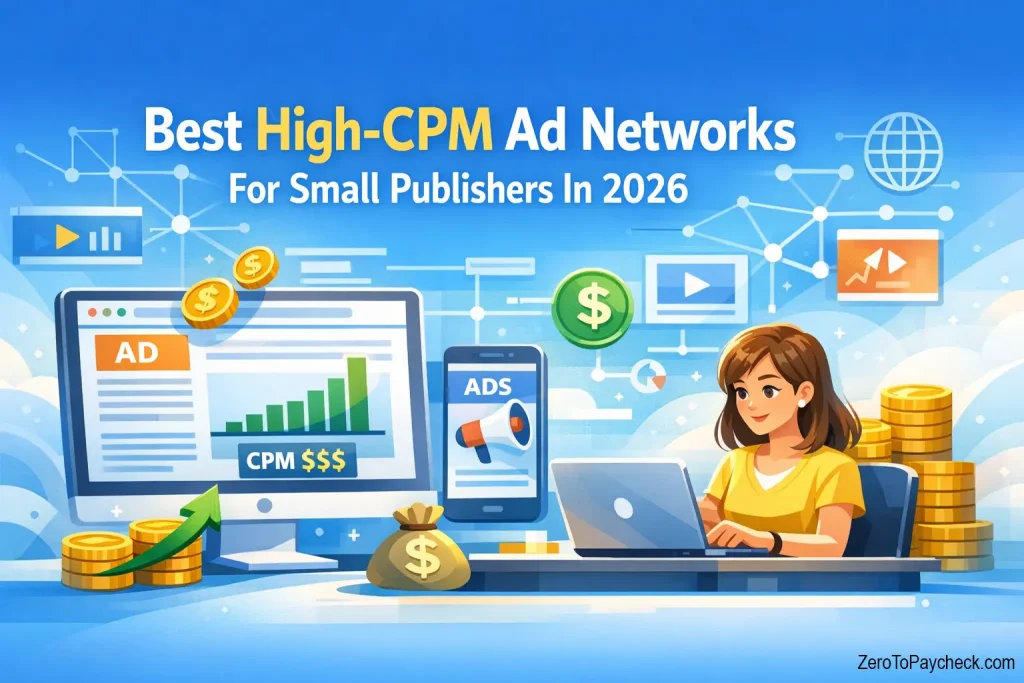
Let me guess: you checked your AdSense dashboard this morning, saw the CPM numbers, and felt that familiar mix of frustration and resignation. You’ve built a real audience. People read your stuff, share it, come back for more. And yet the ad revenue feels like a rounding error — a few dollars here, a few there, nowhere near what your time and effort are worth.
I’ve been there. And I’ve watched dozens of publishers live there for years longer than they should have, either because they didn’t know better options existed, or because the big premium networks seemed impossibly out of reach.
Here’s what I wish someone had told me five years ago: the landscape has fundamentally shifted. The old gatekeeping rules — the ones that said you needed 50,000 monthly sessions minimum just to be considered by a serious ad network — are quietly becoming obsolete. In 2026, a tightly focused niche site with 15,000 engaged monthly visitors can genuinely outperform a generic content farm with 200,000 pageviews in terms of advertiser value.
Quality is winning. Finally.
This guide is built for publishers who are done leaving money on the table. We’ll cover the seven best high-CPM ad networks that actually work for smaller sites in 2026, what it takes to get accepted, how to set yourself up for success before you even submit an application, and the realistic income expectations you should walk in with (no hype, no “make $10,000 in your sleep” garbage — just honest numbers).
By the end, you’ll know exactly which network to try first and what to do to give yourself the best possible shot. Let’s get into it.
The programmatic advertising ecosystem has been through a seismic few years. The deprecation of third-party cookies — something Google and the industry spent years delaying but finally pushed through — forced the entire industry to get serious about contextual targeting. And contextual targeting, it turns out, is very good news for niche publishers.
Here’s the short version: when advertisers can’t follow users around the internet with behavioral data, they have to care more about where their ads appear. A well-written, authoritative article about home woodworking becomes genuinely valuable real estate for a power tool brand, because the context itself is the signal. Your niche content, which used to be slightly disadvantaged in a cookie-driven world, is now exactly what savvy advertisers are paying a premium for.
According to a 2025 Prebid State of the Industry report, niche publishers who optimized their ad stacks saw RPM increases of 18-34% compared to the prior year — a shift directly attributed to the contextual targeting boom. Ad ops managers I’ve spoken with at mid-sized agencies confirm the same pattern: budget is flowing toward quality editorial environments, and away from the anonymous inventory pools that dominated a decade ago.
The rise of AI-generated content has also, somewhat counterintuitively, made human-produced, experienced-backed writing more valuable to advertisers. Brand safety concerns mean major buyers are actively seeking out verified, authentic publisher environments. If you’re writing real content based on real expertise, you’re sitting on something that’s actually appreciating in advertiser value right now.
Who is this for? Honestly, this guide is for publishers who have some traffic — let’s say at least 5,000 to 10,000 monthly sessions — quality content in a defined niche, and a site that isn’t a mess technically. If you’re brand new and haven’t hit those numbers yet, bookmark this and focus on building your audience first. But if you’ve been grinding away and wondering why your monetization hasn’t caught up with your content quality, read on.
| Quick Take Mediavine is widely considered the best all-around ad network for content publishers. Their managed ad stack, strong demand partnerships, and genuinely excellent publisher support make them the benchmark everyone else is measured against. The catch: you need at least 50,000 sessions per month and content that fits their quality bar. |
Mediavine is the network I hear about most when I talk to bloggers who’ve actually figured out monetization. Founded in 2004 as a content company before pivoting to ad tech, they understand publishers from the inside out — which shows in everything from their dashboard design to the quality of their support team.
What makes them different from just slapping Google Ad Manager on your site is their managed ad stack approach. They’ve built long-term relationships with premium demand partners, implemented sophisticated header bidding configurations, and handle all the technical complexity so you don’t have to think about it. Their Grow platform also offers first-party data tools that have become increasingly valuable in the post-cookie world.
Requirements & what to expect:
Payout & earnings: Mediavine pays on a net-65 basis (you get paid 65 days after the end of the earning month), which can feel slow at first. Payments via Tipalti — one of the most reliable payment processors in the publisher space. CPMs typically range from $8-$35 depending on your niche and season, with finance and personal finance content at the higher end and general lifestyle at the lower.
What I’ve personally found talking with publishers on Mediavine: the Q4 earnings bump is real and significant. A food blogger I know saw her RPM go from $22 in August to $47 in November. Plan your cash flow accordingly.
| Quick Take Raptive (the rebranded AdThrive) is Mediavine’s primary rival and, for some niches, actually outperforms them on CPM. They have a higher traffic floor but bring serious demand partnerships and creator-focused tools to the table. |
AdThrive rebranded to Raptive in 2023, and they’ve continued to build on their reputation as the premium choice for high-traffic content creators. If Mediavine is the gold standard for mid-size publishers, Raptive is where you’re aiming once you’ve really scaled.
Their minimum is 100,000 monthly pageviews (not sessions — note the difference), which is a higher bar than Mediavine. But publishers who qualify consistently report some of the highest display CPMs in the industry, particularly in categories like personal finance, parenting, and home improvement.
Requirements:
Raptive’s creator tools have expanded significantly, and their analytics dashboard gives you genuinely useful data about which content is driving the most ad revenue — something smaller networks simply don’t provide. They also offer direct deal opportunities as you grow, which can dramatically boost RPM beyond what programmatic alone delivers.
Payout terms: Net-45, which is faster than Mediavine. Also processed through Tipalti.
| Quick Take Ezoic uses machine learning to test and optimize ad placements in ways no human ad ops team can match at scale. It has a lower entry bar than Mediavine or Raptive, making it genuinely accessible to smaller publishers. The setup requires patience, but the upside is real. |
I’ll be honest with you about Ezoic, because most reviews aren’t: it is more complex to set up than any other network on this list. Their technology integrates at the server level (via Cloudflare or DNS integration), the dashboard can feel overwhelming at first, and the AI optimization takes 30-90 days to really kick in. I watched a friend nearly give up on it during week three.
She didn’t give up. By month four, her RPM was 2.3x what it had been on AdSense. Now she’s a true believer.
Ezoic’s core value proposition is their Artificial Intelligence-driven ad testing. Rather than you manually placing ads in fixed positions, their system continuously tests hundreds of layout variations to find the combinations that maximize revenue without destroying user experience. Their Big Data Analytics platform is also genuinely impressive — the kind of insights into traffic behavior and revenue drivers that used to require a full ad ops team.
Requirements & key details:
Their Humix video network is worth a separate mention. If you’re willing to add video content or host Ezoic’s network videos on your site, the incremental RPM boost can be substantial. I was skeptical about video ads until I saw the RPMs from Humix. Now I get it — video inventory commands significantly higher CPMs from advertisers, and Ezoic handles the heavy lifting.
Payout: Net-30, with payments via Payoneer or direct bank transfer. One of the faster payout cycles on this list.
| Quick Take Setupad has built a reputation as one of the best header bidding solutions for publishers in the 50,000-500,000 monthly pageview range. They bring 30+ demand partners to the table and offer both managed and self-serve options. |
Setupad doesn’t get talked about enough in English-language publishing circles, partly because they’re based in Latvia and grew their reputation initially in European markets. But their technology is legitimately excellent, and publishers worldwide have been finding them in the past couple of years.
Their header bidding implementation is genuinely sophisticated. While a basic AdSense setup involves a single buyer for each impression, Setupad’s setup runs a simultaneous auction among 30+ demand partners — Google, Index Exchange, Pubmatic, OpenX, and many others — ensuring each impression goes to the highest bidder. The difference in CPMs can be dramatic.
One thing that surprised me when a colleague of mine (who runs a tech news site with around 80,000 monthly pageviews) switched to Setupad: they saw a 40% RPM increase within the first month. That’s not a guarantee, and results vary by niche and traffic geography, but it’s the kind of outcome that’s actually documented in their case studies.
Key specs:
| Quick Take Newor Media is one of the few premium-tier networks actively courting smaller publishers. Their minimum traffic requirement is among the lowest of any high-CPM option, making them the right starting point for sites that aren’t yet Mediavine-eligible. |
If you have 30,000 monthly sessions or more and keep getting turned away by the bigger networks, Newor Media is worth a serious look. They’ve built their business around the mid-tier publisher segment that Mediavine and Raptive have historically underserved.
Their demand stack is solid — they work with premium SSPs (Supply-Side Platforms) and DSPs (Demand-Side Platforms) that smaller networks simply don’t have access to. And their ad ops team provides the kind of hands-on optimization support you’d normally only get at the enterprise level.
What you get:
| Quick Take Freestar is less a traditional ad network and more a full-service ad tech partnership. They handle everything from header bidding to direct deal sales, and they’re particularly strong for publishers in gaming, technology, and enthusiast niches. |
Freestar is the name that keeps coming up when I talk with ad ops managers about which partnerships they actually respect. They’re selective — their application process is more rigorous than most — but publishers who get in tend to stay.
What makes them different is their focus on building customized ad stacks rather than applying a one-size-fits-all solution. They’ll look at your specific traffic patterns, niche, and audience demographics and build something tailored. For a gaming blog, that might lean heavily into video and interstitial formats. For a finance site, it might prioritize above-the-fold display with high-value direct deals.
A friend who runs a gaming site with about 120,000 monthly pageviews swears by Freestar. “They actually know my niche,” he told me. “They went out and found advertisers who specifically wanted gaming audiences, not just generic programmatic fill.”
Requirements:
| Quick Take AdPushup isn’t a traditional ad network — it’s an ad revenue optimization platform that works on top of your existing setup, using A/B testing and automation to squeeze more value from every impression. Think of it as an upgrade layer, not a replacement. |
AdPushup is a Google Certified Publishing Partner that takes a different approach from everyone else on this list. Rather than replacing your existing ad setup, they layer their optimization technology on top of it. They use A/B testing, ad layout optimization, and automated rules to improve performance across whatever ad partners you’re already working with.
For publishers who already have a decent ad stack but feel like they’re leaving money on the table, AdPushup can be genuinely transformative. They report average revenue lifts of 33-40% for new publishers, which aligns with what I’ve heard from people who’ve used them.
Key details:
| Network | Min. Traffic | Payment Terms | Best For | Entry Difficulty |
| Mediavine | 50K sessions/mo | Net-65 (Tipalti) | Lifestyle, food, parenting | Medium |
| Raptive | 100K pageviews/mo | Net-45 (Tipalti) | All niches, high-traffic | High |
| Ezoic | No hard minimum | Net-30 (Payoneer) | Any niche, tech-savvy publishers | Low-Medium |
| Setupad | ~100K pageviews/mo | Net-60 (wire/PayPal) | European traffic, tech news | Medium |
| Newor Media | ~30K sessions/mo | Net-30 (PayPal/wire) | Mid-tier indie publishers | Low-Medium |
Here’s where most publishers shoot themselves in the foot. They find a promising network, get excited, and submit an application before their site is actually ready. Then they get rejected, feel deflated, and wait months before trying again — all because they skipped ten hours of preparation.
Don’t do that. Here’s what you need to have sorted before you submit a single application.
| Recommended Tools Site speed: NitroPack (paid but excellent), WP Rocket, or Cloudflare’s free tier. Content auditing: Screaming Frog (free up to 500 URLs). Traffic analysis: Google Analytics 4 (free). Ads.txt management: your hosting control panel or a plugin like Ads.txt Manager for WordPress. |
On scaling: the most reliable way to grow ad revenue is to grow traffic through organic content. A 25% increase in monthly sessions translates to roughly a 25% increase in ad revenue, all else equal. Prioritize content that targets high-CPM adjacent keywords — finance, health, home improvement, and technology topics consistently command premium rates.
I want to share a story that’s representative of what’s actually possible — not the outlier success story, but the realistic mid-range outcome.
A DIY home improvement blogger — let’s call her Sarah — came to me with a site getting around 35,000 monthly sessions. She was earning about $95/month from AdSense. Her content was genuinely good: detailed project tutorials with original photography, written from real experience. AdSense was just… bad for her niche.
Here’s what happened over 12 months:
That’s the realistic arc. Not overnight. Not passive. Real effort on content, combined with choosing the right monetization partner for each stage of growth.
The single most common reason for rejection is technical issues that publishers didn’t even know existed. A flagged ads.txt file, failing Core Web Vitals, or pages that time out on mobile — these are instant rejections. The fix: run through the pre-application checklist in this article before you submit anything. Treat your application like a job interview. You’d iron your shirt first.
Networks review your site manually before approving you. If a reviewer clicks through your content and finds pages that are clearly written to rank rather than to help — padded-out posts, near-duplicate articles, content scraped or heavily borrowed from elsewhere — you’re done. The fix is content quality, which takes time. But it’s the only fix. A content audit using Screaming Frog or Siteliner will surface the worst offenders.
You might be thinking: I thought ad networks want me to show MORE ads? Yes and no. They want to show ads in contexts where users are engaged and the ads are viewable. A site that’s been stuffed with pop-ups, intrusive banners, and autoplaying audio is a brand safety liability for the advertisers on their network. Networks will walk away from publishers with poor UX — and users will too. Clean design, readable typography, and a sensible ad layout are all prerequisites, not nice-to-haves.
Let me give you some honest numbers. These are ranges based on typical outcomes — your actual results will vary based on niche, traffic geography, content quality, and ad placement. Please treat these as informed estimates, not guarantees.
| Monthly Sessions | Finance/Tech Niche | Lifestyle/Food Niche | General Content |
| 10,000-30,000 | $80-$250/mo | $50-$180/mo | $30-$120/mo |
| 30,000-75,000 | $300-$900/mo | $180-$600/mo | $100-$400/mo |
| 75,000-150,000 | $900-$2,500/mo | $600-$1,800/mo | $400-$1,100/mo |
| 150,000+ | $2,500-$8,000+/mo | $1,800-$5,000+/mo | $1,100-$3,000+/mo |
Important caveats: Q4 (October through December) typically generates 30-60% higher CPMs due to advertiser seasonal spend. Q1 is usually the lowest. Finance, legal, and insurance content commands the highest CPMs by a significant margin. Traffic from the US, UK, Australia, and Canada is worth dramatically more to advertisers than traffic from other regions. And these numbers assume you’re on a quality network — AdSense alone will produce roughly 30-50% of these figures for most publishers.
Note: These are estimates based on industry data and publisher experiences. Individual results will vary. Ad revenue is not a guaranteed income and depends on factors outside your control, including advertiser demand fluctuations and platform policy changes. Consult a tax professional about income reporting requirements — most US-based networks will require a W-9 form, and international publishers should be aware of applicable tax treaty rules.
| The Contrarian Take Everyone thinks you need 50,000 sessions to get into a premium network. In 2026, that rule is outdated. Yes, Mediavine still has their threshold. But Newor Media, Ezoic, and several other quality networks have lowered or eliminated traffic floors because they’ve realized what matters is content quality and audience engagement, not raw volume. A focused niche site with 15,000 highly engaged monthly visitors in the right category is more valuable to advertisers than a generic news aggregator with 100,000 passive ones. Apply to the right network for your current size. Don’t wait until you hit some arbitrary number that was designed for a different era. |
Start with Ezoic or AdPushup — both have minimal traffic requirements and will still significantly outperform AdSense for most publishers. While you’re on those, focus obsessively on organic traffic growth. Create content that targets keywords your audience is actually searching for, earn backlinks from relevant sites, and optimize your existing content for search. Six months of consistent effort can take a 10,000-session site to 40,000 sessions — and then your options expand dramatically.
Yes, and honestly you should. Affiliate marketing and display advertising are complementary revenue streams. Ads earn money from every visitor; affiliate links earn money when visitors buy. Most networks (including Mediavine and Raptive) explicitly allow affiliate links. Just make sure your ad density stays reasonable — a page that’s 50% ads and 50% affiliate links with barely any actual content is going to hurt both your SEO and your CPMs. Quality content first, always.
This is the classic publisher dilemma, and it’s real — ads are the number one cause of Core Web Vitals problems on content sites. A few things that actually help: (1) Use lazy loading for ads below the fold — only load ads as users scroll toward them. Your account manager can help configure this. (2) Compress and properly size your images — they’re often a bigger culprit than the ads themselves. (3) Consider NitroPack or WP Rocket for WordPress sites — they handle caching and optimization in ways that partially offset the ad weight. (4) Work with your network’s ad ops team. They’ve seen every speed problem before and often have specific configurations that help.
I was skeptical about video ads until I saw the RPMs. Now I get it. Here’s the honest answer: it depends on implementation. Autoplaying video ads with sound are obnoxious and will tank your bounce rate. But well-implemented video units — placed naturally in content, muted by default, relevant to context — can add $3-$8 RPM to your earnings without meaningfully hurting user experience. Ezoic’s Humix network and Mediavine’s video products both do this reasonably well. Test it on a few pages before rolling it out sitewide.
Plan for 2-6 weeks from submission to going live. Ezoic is typically fastest (sometimes under a week). Mediavine averages 2-3 weeks. Raptive can take 4-6 weeks during busy periods. Factor this into your timeline — don’t plan your income around revenue from a network you haven’t applied to yet.
Watch for these: guaranteed CPM rates quoted before they’ve seen your traffic (legitimate networks can’t promise specific rates). Upfront fees of any kind — reputable networks take a revenue share, they don’t charge you to join. No clear payment terms or threshold information on their website. No real company information, address, or leadership team you can find anywhere. Promises of $50+ CPMs regardless of niche — those numbers exist only in highly specific circumstances, not as a baseline. Stick to networks with established reputations, and when in doubt, search “[network name] reviews” on Reddit’s r/juststart or r/blogging — publishers share their honest experiences there.
I get this question constantly, usually from publishers who are comfortable with AdSense’s simplicity and nervous about change. Here’s my honest take: AdSense is a fine starting point, and it’s genuinely useful for brand new sites still figuring out their audience. But for any publisher with established, quality traffic, staying on AdSense is leaving real money behind. The CPM differences are not small. We’re talking about 2x to 4x the revenue for the same traffic in many cases. The setup effort for a better network is a few hours. The ongoing benefit compounds every month. Make the switch when you’re ready — and this guide is here to help you figure out when ready actually is.
Let’s bring it back to where we started: that moment of looking at a low CPM number and feeling like your work isn’t valued.
Here’s the truth. The ad market does value your work — in 2026, more than ever. The problem isn’t the market. It’s that the wrong intermediary was sitting between you and the advertisers who’d actually pay well for access to your audience. The networks in this guide exist to fix that mismatch.
Your site is an asset. It produces value every day — for your readers, and increasingly, for the advertisers who want to reach them. The question is whether you’re capturing that value or letting someone else capture it for you.
So here’s your next step: Pick the network from this list that matches your current traffic level. Go through the pre-application checklist. Fix what needs fixing. Submit your application this week.
Not next month. Not once you hit some traffic milestone that feels safely out of reach. This week.
The publishers who’ve figured out ad monetization didn’t do it by waiting for perfect conditions. They did it by choosing the right partner for where they were, building from there, and treating their ad revenue like the serious business income it can be.
You’ve already done the genuinely hard part: building something worth reading. Now go get paid what it’s worth.
Disclaimer: Income figures in this article are estimates based on industry data and publisher reports. Individual results will vary. This article contains general information only and is not financial or legal advice. Always consult qualified professionals regarding tax obligations and business decisions.