Physical Address
304 North Cardinal St.
Dorchester Center, MA 02124
Physical Address
304 North Cardinal St.
Dorchester Center, MA 02124

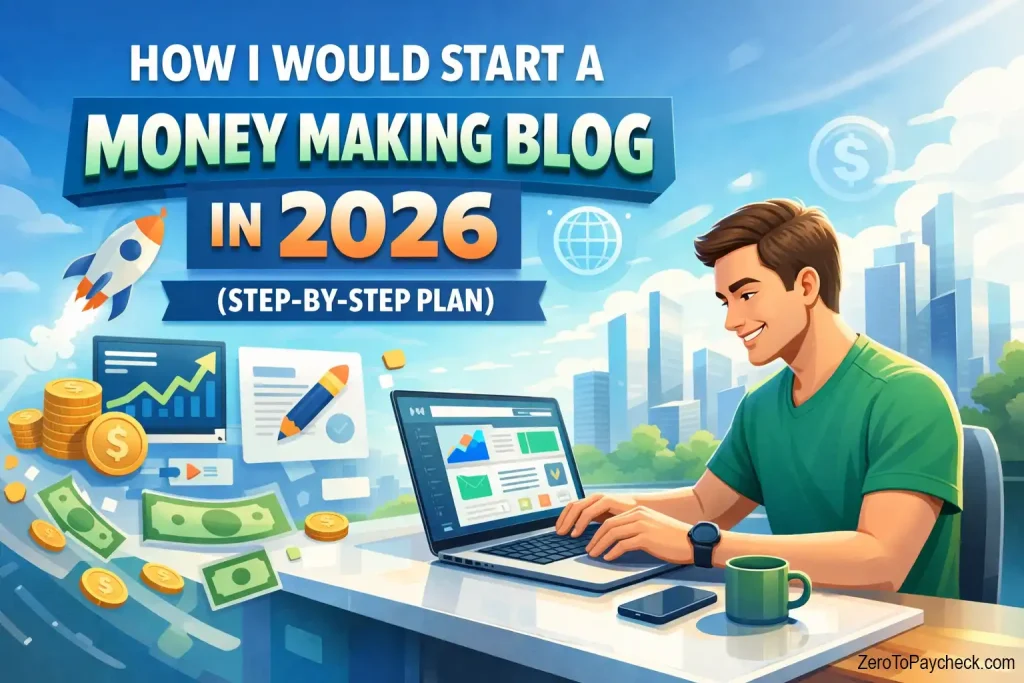
Let me guess. You’ve seen the headlines. “Make $10,000 a month blogging!” You rolled your eyes. You’ve probably tried clicking on a few of those articles, read 800 words of fluff, and closed the tab feeling exactly as lost as before. I don’t blame you. Most of that content is recycled garbage from 2019 dressed up in a fresh WordPress theme.
Here’s my honest take after building multiple blogs, some profitable, some spectacular failures: blogging for money is real, but it’s not magic. It’s a business. Treat it like one and you’ve got a shot. Treat it like a lottery ticket and you’ll be disappointed by month three.
I want to be clear about something upfront. Results vary. A lot. The person who starts a blog tomorrow and earns $5,000 in six months exists. So does the person who puts in eighteen months of solid work before they see their first meaningful paycheck. Both are real. What separates them has less to do with luck than most people think — and more to do with the decisions we’re going to cover in this guide.
So why am I writing this in 2026? Because the landscape has genuinely shifted. AI-generated content flooded the internet starting in 2023. Google responded by changing its algorithm to reward first-hand experience and genuine authority more than ever. That’s actually good news for you, if you’re a real person with real knowledge and a willingness to be honest on the page.
What you’ll learn in this guide:
Let’s get into it.
| Quick answer: The blogging landscape is more competitive but also more rewarding for genuine, experienced voices. AI content saturation has made authentic human expertise the scarcest — and most valuable — commodity online. |
Here’s what happened over the last few years. AI writing tools became cheap and accessible, which meant millions of low-effort “content farms” flooded the internet with thin, repetitive articles. For a while, some of them ranked. Then Google got smarter.
Google’s Helpful Content System updates, rolled out repeatedly from 2022 through 2025, specifically targeted sites that existed to rank rather than to help. Sites built around genuine expertise — what Google calls E-E-A-T (Experience, Expertise, Authoritativeness, Trustworthiness) — have been rewarded. According to data from Semrush’s 2025 State of Content Marketing report, sites demonstrating first-hand experience saw ranking improvements of up to 43% compared to sites relying purely on keyword-stuffed content.
Meanwhile, the digital economy keeps growing. Statista projects global e-commerce revenue to exceed $8.1 trillion by 2026. More people are spending money online, buying digital products, clicking affiliate links, and subscribing to newsletters than at any point in history. The audience has never been bigger.
The content creators who are winning right now aren’t the ones churning out 50 posts a month. They’re the ones publishing fewer, deeper, more authoritative pieces — and building email lists that they actually own. That shift plays perfectly into the hands of a thoughtful beginner willing to play a longer game.
Who is this for? Honestly? Anyone with genuine knowledge about a topic people search for, the discipline to write consistently, and the patience to wait six to twelve months for real results. If you need $500 by next Friday, blogging isn’t your path. But if you’re thinking about building something that could replace or supplement your income in a year or two? You’re in the right place.
Most people fail at blogging before they ever hit publish. They pick the wrong niche, write for no one in particular, or build a blog that looks exactly like every other blog in the space. These three decisions will save you months of wasted effort.
| Key takeaway: Your niche should sit at the intersection of three things — topics people actively search for, problems that have monetizable solutions, and subjects where you have genuine experience or willingness to develop expertise. |
I made a painful mistake with my first blog. I started a general “lifestyle” site because I thought it would give me flexibility. What it actually gave me was a site about nothing in particular, targeting no one in particular, earning nothing in particular. It took me eight months to kill it and start over with a focused niche.
The most profitable blog niches in 2026 still cluster around four areas: money and finance (personal finance, investing, frugal living), health and wellness (fitness, mental health, nutrition), technology (software reviews, AI tools, productivity), and relationships and personal development. That said, “profitable niche” doesn’t mean you have to pick one of those. What matters more is that the niche has:
The personal angle piece is where most guides let you down. They say “find a profitable niche” as if that’s the whole job. It’s not. A profitable niche you hate writing about will kill your blog just as surely as a passion project no one searches for. The sweet spot is where monetizable meets meaningful.
Tools to use: Google Keyword Planner (free), Ahrefs or Semrush (paid, worth it eventually), and simply browsing Amazon bestsellers or Reddit communities to find what people actually pay money to solve.
Here’s something that surprised me when I moved from vague to specific: writing for a narrowly defined reader actually made my content easier to write, not harder. When you know you’re writing for “a 34-year-old nurse who wants to pay off her student loans and is skeptical of get-rich-quick schemes,” every sentence becomes a decision. Would she trust this? Would she find this useful?
Write out a reader persona before you publish a single post. Name them. Give them a job, an income, a problem they’re trying to solve. This isn’t a marketing exercise — it’s a writing tool. The blogs I’ve seen grow fastest always have a crystal-clear sense of who they’re talking to.
There are already 600 million blogs on the internet. Why will someone read yours?
You don’t need to be the world’s foremost expert. You need a clear, honest answer to: what’s my specific angle? Are you a software engineer writing about personal finance from a high-income professional’s perspective? A single parent who figured out how to travel internationally on a budget? A former teacher who knows how to make complex topics simple?
Your positioning doesn’t have to be outrageous. It just needs to be specific and real. The moment you can say “I write [topic] for [audience] from my perspective as [credential or angle],” you have something to build on.
| Key takeaway: You need WordPress.org hosted on a reputable shared host. Everything else is optional. Don’t let tech setup become the reason you never start. |
I’m going to make this section shorter than you might expect, because most “start a blog” guides spend 3,000 words on tech setup and turn it into a terrifying maze. Here’s what you actually need:
WordPress.org powers 43% of the entire internet as of 2025. It’s free, flexible, and supported by more themes, plugins, and tutorials than any other platform. The learning curve exists but it’s been smoothed out considerably — most modern hosts have one-click WordPress installation.
Substack and Ghost are worth mentioning. If your primary monetization plan is newsletters and paid subscriptions, Substack is a legitimate alternative with zero setup costs. But for a blog you intend to monetize through affiliate marketing, ads, and products — WordPress is still the standard.
For most beginners, shared hosting from a reputable provider is the right starting point. SiteGround, WPX Hosting, and Cloudways are consistently recommended by bloggers I’ve spoken with. Budget hosts like Bluehost or Hostinger can work initially but can cause speed problems as your site grows.
Expect to spend $5–$20/month starting out. That’s genuinely your only mandatory upfront cost — hosting and a domain name (~$15/year). Don’t let anyone tell you blogging requires significant startup capital.
Pick a clean, fast-loading theme. GeneratePress and Kadence are both excellent free options. Astra is another solid choice. You do not need a custom-designed site to start. You need fast load times (Google factors this into rankings) and readable typography.
One plugin you should install from day one: Rank Math or Yoast SEO. These free plugins handle most of your on-page SEO mechanics so you can focus on the writing.
| Key takeaway: In 2026, Google rewards content that demonstrates genuine first-hand experience on specific topics better than competing pages. Write fewer posts. Make each one genuinely the best answer to its target question. |
Here’s the contrarian take you haven’t heard from the other blog posts on this topic: you should not post every day. In fact, publishing daily content as a new blogger is actively counterproductive in 2026.
Here’s why. Google’s algorithm evaluates your entire site’s quality. If you publish 30 mediocre posts in your first month, you’ve trained Google to associate your domain with mediocre content. The bloggers I’ve seen grow fastest in the current environment publish 2–4 deeply researched, genuinely useful posts per month and promote them properly — rather than churning out daily fluff that no one reads and no one links to.
What makes a post rank in 2026:
Before you write anything, build a simple content plan in a Google Sheet or Notion doc with these columns:
Start with 10–15 keywords. These become your first 10–15 posts. Don’t worry about having all 15 before you start writing — just have five solid ones locked in before you publish your first post.
For keyword research, free tools like Google’s “People Also Ask” boxes and AnswerThePublic will get you surprisingly far. When you’re ready to invest, Ahrefs or Semrush are the industry standards.
Let’s talk money. There are four main monetization methods that work for blogs in 2026. Each has a different effort level, timeline, and income ceiling. Here’s my honest assessment of all four.
This is where most bloggers earn their first real money, and for good reason. You recommend products or services, readers buy through your unique link, and you earn a commission — typically 5% to 50% depending on the product type. Physical products (Amazon Associates) pay less; software subscriptions (SaaS) and digital products pay more.
What works now: product comparison posts, “best [X] for [Y]” roundups, honest reviews with your actual experience using the product. What’s stopped working: generic reviews with no first-hand use, stuffing affiliate links into irrelevant content.
Networks to know: ShareASale, CJ Affiliate, Impact, and individual brand affiliate programs (often found by Googling “[brand name] affiliate program”). Amazon Associates is easy to start with but the commission rates (typically 1%–4%) mean you need significant volume to earn meaningfully.
I’m genuinely enthusiastic about software affiliate programs. A single SaaS product with a 30% recurring commission can pay you every month as long as the customer stays subscribed. One blogger I know earns roughly $3,000/month from a single email marketing software affiliate program — from content she wrote two years ago.
Google AdSense is available from day one, but the pay rates are genuinely terrible for small sites. Don’t bother setting it up early — the psychological discouragement of earning $0.03 a day is not worth it.
The real money in display ads starts when you qualify for premium ad networks. Mediavine requires 50,000 monthly sessions; Raptive (formerly AdThrive) requires 100,000 monthly pageviews. These networks earn you 3–5x what AdSense pays. At those traffic levels, a niche site can realistically earn $1,000–$5,000+ per month from ads alone.
Bottom line: treat display ads as a passive income layer you add once you have real traffic, not your primary monetization plan on day one.
This is, in my experience, where blogs make the most money per reader and per hour of effort — once you’re ready. An ebook that sells for $27, a course that sells for $197, a template pack for $47. You create it once and sell it repeatedly.
The catch: digital products require a warm, trusting audience before they convert well. Trying to sell a course to 500 monthly visitors usually doesn’t work. But building your blog with a product in mind from the beginning — growing an email list with ConvertKit, building trust through consistent content — sets you up to launch something meaningful by month 6–12.
Platforms to know: Gumroad (low barrier to start), Podia, Teachable, and ThriveCart for checkout optimization.
Nobody talks about this enough. Your blog is a portfolio. Even with 1,000 monthly readers, you can offer freelance writing, consulting, or coaching services directly. This is the fastest path to real income — weeks rather than months.
I know a personal finance blogger who spent six months building his site before he realized he was getting emails asking if he offered one-on-one money coaching. He started offering 90-minute sessions at $150 and booked out within a week. Services aren’t as “passive” as affiliate income, but they pay you while you’re waiting for your blog traffic to grow.
Monetization Method Comparison:
| Method | Effort | Timeline | Income Range | Best For |
| Affiliate Marketing | Low–Med | 3–9 months | $100–$5,000+/mo | Best long-term passive |
| Display Ads | Low | 6–12 months | $50–$2,000+/mo | Needs 25K+ sessions |
| Digital Products | High (upfront) | 6–18 months | $500–$10,000+/mo | Highest profit margin |
| Services/Consulting | Med | 1–3 months | $500–$5,000+/mo | Fastest to first dollar |
| Sponsorships | Med | 9–18 months | $200–$3,000/post | Needs audience first |
Note: Income ranges are illustrative. Actual results depend heavily on niche, traffic volume, audience quality, and execution. These are realistic ranges from bloggers I’ve spoken with — not guarantees.
| The 90-day plan below isn’t about perfection. It’s about momentum. Do the imperfect thing. Fix it later. A published post that’s 80% great beats a perfect post that stays in your drafts folder forever. |
Picking a niche purely for profitability and running out of things to say (or caring to say them) by month two is the most common reason blogs die. If you find yourself dreading the writing, your content will feel like it, and readers will sense it. Profitable + sustainable beats profitable + miserable every time.
Social media followers are borrowed. A platform can change its algorithm, ban your account, or shut down entirely. Your email list is yours. Bloggers I’ve spoken with consistently say that starting their email list earlier is their biggest regret. Install ConvertKit or MailerLite on day one and offer something valuable to get signups.
Writing posts nobody searches for is a silent killer. You can publish beautifully written content and earn exactly zero readers if no one is Googling the questions you’re answering. Learn basic keyword research before you write your first post. It takes a few hours to understand and will change every publishing decision you make.
Most blogs that fail do so not because the niche was bad or the content was poor — but because the owner stopped publishing before Google had enough content and time to rank their site. The six-month mark is where most people quit. It’s also, not coincidentally, where many blogs start to see their first meaningful traffic. The timeline is uncomfortable. That’s normal. Push through it.
One red flag worth mentioning: be cautious of any course, service, or coaching program promising to make you a six-figure blogger for $2,000 upfront. Legitimate blogging education exists, but the blogging-about-blogging niche has more scams than most. Do your due diligence before spending significant money on coaching.
| Disclaimer: The income figures below are illustrative ranges based on reports from bloggers across various niches. Your results will vary based on your niche, content quality, consistency, and promotional effort. Blogging is not a guaranteed income stream. |
Expect to earn: $0–$50/month. This isn’t failure — it’s normal. Google hasn’t indexed enough of your content to send significant traffic. Your audience doesn’t know you exist yet. Focus on publishing quality content and building your email list. If you apply for affiliate programs during this period, you might earn small commissions. Celebrate them.
Expect to earn: $50–$500/month. Some posts start ranking. Your email list is small but real. Affiliate commissions become occasional. A few hundred monthly visitors is enough to start seeing what content resonates. This phase is where you should double down on what’s already working.
Expect to earn: $200–$2,000+/month. For bloggers who stay consistent, this is where things get interesting. Traffic compounds. Email subscribers grow. If you’ve positioned affiliate content well, commissions start adding up. Some bloggers in profitable niches cross $1,000/month before the 12-month mark. Others take longer. Both are fine.
The blogs I’ve watched grow past $5,000/month almost universally share one trait: they treated their blog as a business for at least 18 months before it felt like one. At this stage, ad revenue from Mediavine or Raptive layers on top of affiliate income. Digital products start converting. The income becomes genuinely passive for large portions of your day.
Factors that separate the top earners from the average: niche selection (high-CPC niches like finance, software, and legal topics pay more per reader), content depth and quality, email list size and engagement, diversified monetization, and frankly — time in the game.
Yes — with a caveat. Generic, low-effort content is essentially worthless now. But blogs with a clear niche, genuine expertise, and well-researched content are doing better than ever because there’s less good competition. Authentic voices cut through noise.
No. Plenty of profitable blogs are run pseudonymously or as brand sites without a personal face attached. That said, showing your face and sharing your real story tends to build trust faster — which affects email signups, product sales, and repeat readership. It’s a trade-off worth considering, not a requirement.
Almost. WordPress.org requires hosting (~$5–10/month) and a domain (~$15/year). That’s genuinely it. Free alternatives like Blogger or WordPress.com exist, but the limitations on monetization and customization make them poor long-term choices. Consider the hosting fee an investment, not an expense.
There’s no magic number, but most bloggers I’ve spoken with start seeing meaningful affiliate income after 20–30 well-targeted posts. What matters more than quantity: are your posts targeting keywords people search for, and are they genuinely better than the current top results?
As soon as you start earning money, you’re self-employed income — report it. In the US, you’ll likely file a Schedule C with your taxes and pay self-employment tax. Once you’re earning consistently, it’s worth talking to an accountant about LLC formation. For affiliate marketing, you’re legally required to disclose your affiliate relationships — the FTC takes this seriously. A simple disclosure statement on your site is non-negotiable.
You don’t need to be a great writer to be a great blogger. You need to be clear, helpful, and honest. Read your posts out loud before you publish — if you’d be embarrassed to say it in conversation, rewrite it. Your writing will improve naturally the more you publish. The first 50 posts are basically practice.
In my experience, using AI as a research assistant and outline generator is fine — it can save real time. Using AI to generate full posts wholesale is a path toward content that ranks poorly, reads flatly, and undermines the authentic authority you’re trying to build. Google has gotten markedly better at identifying thin, AI-generated content. Use AI as a tool, not a ghostwriter.
Essential tools for getting started:
Internal reading to go deeper:
Here’s what I want to leave you with. Blogging is not a shortcut. It never was, and anyone who tells you otherwise is selling something. What blogging is — done right — is one of the most sustainable, scalable ways to build income online that exists. You create an asset. You own it. You build it on your own schedule. And over time, if you’ve built something genuinely useful, it keeps earning money while you sleep.
The people who succeed aren’t necessarily smarter or better writers. They’re the ones who picked a focused niche, kept publishing when it felt pointless, treated their readers like real people worth helping, and didn’t quit before the compounding kicked in.
I’ve watched bloggers transform their financial situations through this work. I’ve also watched smart, talented people give up in month four because they couldn’t see what was coming. The difference between the two groups usually wasn’t talent or luck. It was patience.
Start small. Be specific. Write like you’re helping one person. Build your email list from day one. Pick your niche carefully and stick with it long enough to know whether it’s working.
You came to this article skeptical. That’s healthy. I hope I’ve earned enough trust to convince you that this is worth trying — with eyes open, realistic expectations, and the willingness to treat it like the real business it is.
Now close this tab and buy your domain.
Income & Earnings Disclaimer
The income figures and examples mentioned in this article are for illustrative purposes only and should not be interpreted as typical or guaranteed results. Starting a blog involves risk and requires significant time, effort, and consistent work. Individual results will vary based on niche selection, content quality, audience size, monetization strategy, and other factors. This article may contain affiliate links. Always consult a qualified financial or legal professional before making business decisions.